I picked up this 33 1/3 that is being meta talked about in this Guardian article. Read the first few pages while waiting to get my blood drawn at the clinic.
I really have trouble articulating all the feelings this album has given me over the years. It felt like a sledgehammer to the face the fist time I heard it as a sixteen year old, driving home from the St. Charles, MO Best Buy.
It’s been with me through moves and breakups, through sexual assault, and recovery, and now I’m hitting some stage of transition where it is back at the forefront. it’s on the speaker now, as I type this.
Anyway, both of the linked pieces directly talk about Tori Amos and a sense of self-disgust. I think that’s something that most trans women have something to say about. I know it’s a common part of the trans dialogue to talk about how you knew at three and you have these memories of sneaking into your mom’s heels and running around as a kid. Some of that was probably there for me. Certainly, my closest friends, from a very early age, were mostly female, and I’d also say that most of my memories until at least high school are a bit of an incoherent blur. But what was never unclear, was this sense, from the onset of puberty on, that there was something horribly, profoundly, terribly wrong with me. My sexuality was an enemy, my emotions were an enemy, my body was wrong (but I also had no real idea what was right). I would just run to the point of exhaustion and bone problems, hide behind my hair whenever I could talk my parents into letting me grow it out, and try for the best. I also did a lot of learning how to lean into my worst cringe, turn it into a performance — if other people were going to laugh at me anyway, I could at least control the tenor if it, which I see now as its own sort of coping self-harm. I guess having this album that revels in those parts of you that you would rather not be there, and that OTHER PEOPLE REALLY would rather not be there makes sense.
And of course, there’s the feeling of being a “boy” at what was at least a moderately conservative place (like, Bob Dole literally made a campaign stop at my high school in the last days before the 1996 election, remember when MO was the consummate swing state?), and having Tori Amos be your favorite radio musician. Not only was she so femme, so loud, but she was… so weird and inaccessible. While everyone surrounding me was all gaga about 311 and Nirvana and the Deftones… I had Tori. (and the Indigo Girls, and all of the ’60s folk, etc, and later, Dar Williams came into my life, her relentless earnestness being the near total opposite of Tori, but to this day, still holding such a special place for me in my heart). In those days, it was the sad, introspective, hurt songs that almost seemed to create this space where it was safe to feel feelings, especially in the long hours spent driving from place to place in those days.
The disgust of transitioning
I’ve done a lot of processing out the intervening decades lately, and I don’t think retreading that particular trauma is useful right now, but I’d like to talk a bit about the experience of actually starting to feminize yourself, which for me was a long slow social transition, and then, at the end of a decade of that, beginning hormones. It’s very hard to describe the feeling of first starting to show up as femme in public as a transfeminine person. You live inside with this profound sense of **something is wrong**, and you finally see a light out, and start finding things that feel **right**. It feels revolution. It feels like freedom. It feels like a way out.
And then you go into public, and you see people’s faces.
It’s so deflating at first. For a lot, you’re just *cringe*, they’re sorry for you, they stare a bit, there’s a pain on their face (btw, this is part of why most trans women take pretty deep offense at being called “brave.” We’re vividly aware of how much cringe there is tied up with the perception of us — being called “brave” is basically saying “I see how cringey you look, and I can’t believe you still have what it takes to bring your chin out and exist in public!”). In most rooms I went into those early days, there were much more sinister and angry faces. Sometimes, I could even see the face progress from a horny leer, to a recognition of what I was, to pure rage. It was terrifying, it was invalidating, it made me ashamed of myself, all of it. But once you know that the old box you were living in doesn’t fit anymore, what can one do but endure it or fight against it?
And I think you see this in trans culture all over the place. There is a celebration of the cringe, the ridiculous. It’s there, in the cat ears, the knee high striped socks, the trans flag everything, the anime talk, 100 gecs, I could go on. ”You’re going to stare at me? you think I’m absurd?! I KNOW I’m absurd. I’m going to be absurd HARDER. STARE AT ME. I ENJOY THIS, I ENJOY WHO I AM, AND NO ONE WILL TAKE IT FROM ME.”
As the hormones did their work, and as I became middle aged, and as I learned how to dress and properly apply makeup, and as I relocated to a safer place, the cringed and violent stares generally became either neutral or smiling. These days, the daily threat assessments of those days are a thankful memory. But it is impossible to forget the intense juxtaposition of euphoria and self-disgust of those early days.
Today, as I process through everything that has happened to me in the past year, the past decade, since puberty, and I listen to Boys for Pele, I’m stuck on Putting the Damage On, which is definitely one of the grippier and most accessible songs on the album. The direct lyrics to the thing are about excising an ex out of your life, dividing your stuff, reminiscing over what happened, and the admixture of grief and freedom that that moment gives you.
For me now, though, the song kind of feels like I’m having a chat with that 12 year old transfeminine egg that heard Silent All These Years on the radio on the way to her grandparents’ house and didn’t have the courage to yell for it to be turned up. The 18 year old that fought for long hair, but didn’t know how to express or understand what that need met, the person that survived for all of those years constantly thinking of death. As I figure out just how estranged I now am from my birth family, I’ve finally forgiven that egg version of me for waiting so long and taking such a roundabout route. They were doing the best they could, and they kept me safe, and they kept me alive, and their fear makes sense now. So I grab his things, and I divide out what is mine, and even still, he can look so pretty to me as I say goodbye and as I forgive him. Because I’ve got a place to go.
Listening to this album now, in my room as my real self, with all that I’ve done and been through, I think I’ve finally found the space to forgive myself for all of the damage I’ve done to myself. All of the damage being **him** did to myself and others. I might be cringe. I might hurt. But I’m here, and I’m blooming, and I’m thriving, and that egg figured out a way to get me to here. This post is probably getting too long, so I’ll leave it at, just this:
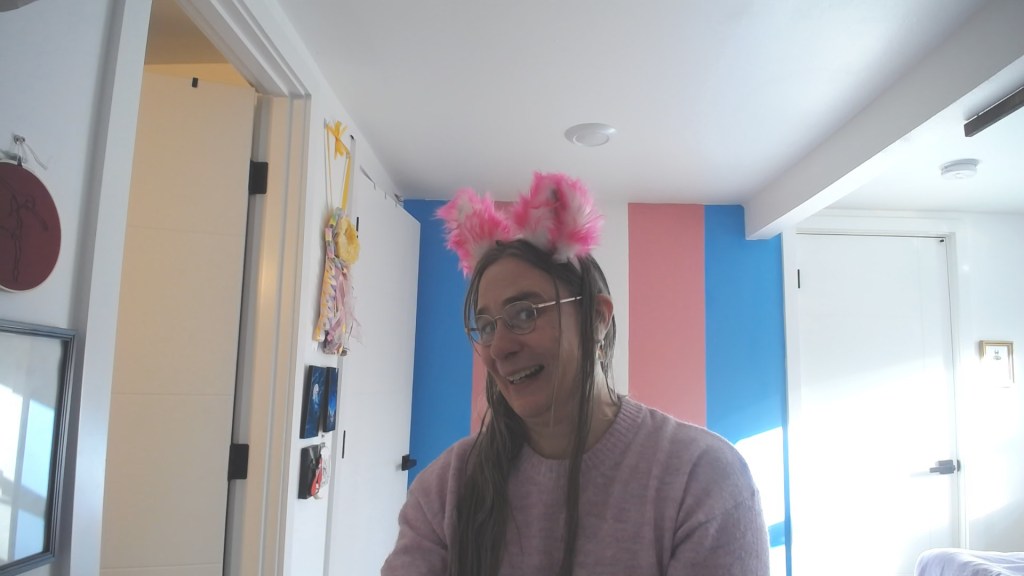
UwU, motherfuckers.
 Zoë Michelle's little corner of the internet
One thought on “Listening to Tori Amos as an egg”