So, you’ve gotten through the previous article, and you can probably already see that there is a lot of choice. That choice then gets compounded by just the sheer number of surgeons out there, which I haven’t especially gotten into yet. What goes into the time between “I decide I want to do this” and “I have a vagina now”? I’m going to walk you through the process I personally used, please do take or leave my specific advice, but I’m at least trying to show one way that one could narrow down this process, which is obviously intensely personal.
Step 1: do I want this surgery at all?
This is itself a pretty fraught thing. I personally started out pretty firmly in the “non-op” camp. When **looks around** started happening, and the threat of forcible governnment-sponsored detransition started staring me in the face, making myself physically non-detransitionable became a priority. So, approximately a year and a half ago, I got the orchi done. And the result of this was just immediate relief. I found a new happiness and rightness with my body, and was just completely caught off guard by what was a very practical logistical decision for me. Behind THAT, though, was a pile of new bottom dysphoria, showing up slowly at first, and then gradually screaming more and more loudly. Before long, it was pretty clear that I needed the old thing gone, and found myself doing internet searches for bottom surgery stuff more and more often.
The takeaway, here, I think is that this is an intensely personal process. What does your body want? What feels good when you query it? You can probably add stuff like “is passing in locker rooms and the like a transition goal for you?”
Step 2: Which surgery, though?
Now, in Part I, we listed a lot of various procedures, and why we did was for a very specific reason — getting an idea of what is out there can be used to then go and inform what you actually want. There are a lot of surgeons out there, and they have a lot of procedures that they offer. If you just exhaustively go through EVERYONE, you’ll be researching for a long time. One fast way to narrow the space down is to then step back and say “what do I want?” Typically, every vaginoplasty surgeon will do penile inversion, but as you get into the more specialized procedures, they will require more certifications and equipment (PPT requires a secondary laproscopic surgery and robotic assistance, for one example), and fewer surgeons will offer those procedures.
This is also the period where it is good to think about whether you are considering keeping the phallus or doing zero/minimal depth. Some thoughts I’ve heard women talk about here are:
Do you want to engage in receptive vaginal sex? How about recieving dildos, strap-ons, etc? Do note, here, after a vaginoplasty, that the canal will be placed in-between the prostate and the rectum, so, the prostate will be basically where a cis woman’s g-spot would be, and will not be accessible the other way anymore, though practical results vary a lot
How bothered are you by the idea of dilating, starting from frequent daily dilations and tapering down to lifelong weekly dilations over the first year (noting that penetrative sexual activity counts as dilation once in the maintenance phase)? This can be an emotionally draining thing for some women, for some it’s not an especially big deal
Is the shorter recovery time of zero depth attractive?
Does your dysphoria include a lack of an internal canal?
How big a deal is hair removal? A lot of surgeons will require permanent hair removal on any surgical areas, with PIV having the most extensive requirements, and min depth often requiring no hair removal
For me, the answers to these were 1. yes, 2. not a ton, 3. yes, 4. extremely. 5. it sucks, but I’ll deal. And really point 4 was the sort of definitive thing that pushed me over to seeking traditional full-depth vaginoplasty. As for choosing between the various types of full-depth procedures, concerns about self-lubrication, recovery time (the more sites you harvest tissue from, the bigger the surgery is), surgeon availability, and post-operative heath (harvesting from the colon can affect colon health, for example) are the things that came into play. If various preexisting health conditions are present, or certain matter is insufficient to do the surgery (notably, if a trans woman went on puberty blockers and/or HRT previous to puberty, she might not have enough of a penis to then repurpose to a canal, precluding PIV alone as a viable choice), it might limit the choices of procedure, too.
OK, so how do I find a surgeon?
So, step one, especially (in the USA) if you plan on using insurance to pay for surgery (though this is part of WPATH, so I suspect most single payer systems will mandate this, too, but I know nearly nothing about using non-USA national insurance to do trans surgeries), before you go hunting super hard: get a HRT note from your HRT provider stating that you’ve been on hormones for at least a year. Any primary care doctor should be able to write this, so if you’re on DIY hormones, you’re going to have to find a doctor to write to for this step. Similarly, you are also going to need at least one letter from a therapist or social worker diagnosing you with gender dysphoria and recommending vaginoplasty. If you plan on getting other procedures, I’d highly recommend just getting every condition you’re even thinking about on both of these letters so you don’t have to go begging for them again. Typically, for trans bottom surgeries, you will need two therapist letters, but most insurance requires that the second letter come within a calendar year of surgery, so I’d kind of recommend waiting until you have a date before getting therapist letter #2, so you can guarantee it’s not stale. But having your letters in order will definitely make hunting for surgeons easier.
Armed with your letters and the knowledge of what you want, it is now time to go to the internet and start looking around. I plan on having part 4 of this series be a simple annotated research list, but I will say that the wiki at r/Transgender-Surgeries on reddit is at least a good way to get a pretty comprehensive list of surgeons. This is also the phase where you should start asking yourself about your secondary priorities:
How willing are you to travel? Most procedures will require at least some extended stay within driving distance of the operation, and by most accounts “time in the passenger seat post-op” is a quite unpleasant thing
How are you paying? If you are using insurance, this is where you start cross-validating with your insurance’s website to figure out who is in-network. Some surgeons either are out-of-pocket only or only do reimbursements. If you are considering going to Thailand to have it done, in the classic transfeminine way, then you likely will be paying completely out of pocket.
If you care about having a trans woman do your vaginoplasty, your three choices as of this writing are Marci Bowers, Christine McGinn, and Ellie Zara Ley
How long are you willing to wait to get the surgery done? Wait times as of this writing vary from 9-ish months to “2 years to consult, and then another year or two to surgery”. Note that if you are doing hair removal that you should definitely budget at least like six months to a year to get that finished. Electrolysis is both slow AND fun! (bottom prep electro does go faster than face, though)
Now, it’s time to get surgeons names, and to start investigating them. I recommend going to their websites and seeing them talk about their surgeries. I REALLY recommend looking for results photos, noting that there are biases in pretty much every source for results photos. The surgeons’ sites themselves are obviously going to be biased toward “good” results, and various forums will have cultures toward complaining about results to a sort of “showing off the new pussy.” Different surgeons will definitely have their own individual sort of aesthetic. This is also where you will find out more about their individual techniques — some surgeons do vaginoplasties in two phases, some have different stitching techniques, some default to various techniques, they will all have different dilation schedules and different recovery timetables. A lot of them will even straight up have their pre- and post-op instruction packets just free for download, whcih can be really informative. This phase of research definitely was the one that took the longest for me.
By the time you’ve spent some time (for me, this was several months) reading through all of this, it is time to start scheduling consults. The surgeon’s website will usually tell you how. The wait lists are long, so it’s usually better to get in line for consult sooner rather than later, and then drop off if you don’t need the consult later. It’s also not the worst idea in the world to get multiple consults, just to see if you mesh with a different office better than another.
For me, I went through this process, and I kind of valued recovery time, minimizing risk, and especially minimizing time to surgery. After looking online, I meshed with his general aesthetics, and have opted for a PIV with John Henry Pang at Align Surgical.
So now, congrats, you have a consult. Part 3 will be a discussion about what happens next, and part 4 will be a list of resources for research. Thank you for reading
I have a full depth penile inversion vaginoplasty on the books for early 2026. A whole lot of my personal energy and attention in 2025 has been devoted to research and logistics around this surgery. It’s been a very long time coming, and will be my last step of transition, beyond just continuing to fuck with my voice and being on HRT for life, and the remaining facial electrolysis I have to do. In the past year, I’ve been asked about logistics around this, and for research shares, and the like, and this article is my attempt to capture any insight I have about the research process at this snapshot of my life. This is an overwhelming choice, and there is a lot of complexity to this, associated with a lot of trans women with angry yelling opinions.
My attempt with this article is to communicate my process with this, and hopefully to give some organization to the absolutely overwhelming and fragmented information out there. This article is not me giving medical advice, it is not me endorsing an outcome. It is me trying to explain what is out there, and hopefully give you, the reader, a chance to know what is out there so that you can do your own research for yourself. Invariably, this is going to be colored by my own experience, but I’m going to try and make this more informational than preachy. If I’m full of shit, leave a comment. I’m sure I’ll make mistakes, and I’m even more sure that this article will be out of date pretty soon. And I can’t imagine that my feelings will be changed with post-op eyes.
And after starting to write this, I’m realizing that it’s going to be long and big, so I’m going to split this into three parts: a glossary of terms, an outline of my personal process for approaching all of this and coming to a choice, and then a list of various resources and surgeon’s sites. I strongly encourage anyone thinking about this to do a lot of reading and soul-searching and research. It’s a big, life-changing thing, and so much of it is out of your control.
Also, sorry not sorry about the tulip header photo, sometimes, you can’t resist.
Glossary
Before we go, and probably most helpfully, given the stares I get when I dive into talking with this with people who are just starting, I’m going to define a bunch of terms so that we all know what we are talking about. All of these are somewhat commonly discussed in trans surgery communities, and my definitions are as aligned as I can make them with common usage, but different communities might have different understandings, and as always, I recommend communicating a lot and being clear, but I believe that this glossary should make most transfeminine bottom surgery forua legible to a reader. I plan on amending this if I find stuff I forgot about, and/or if/when mistakes come to light.
Bottom surgery — the general process of reconfiguring one’s genitals, usually in the context of transition care. There are many trans bottom surgeries, so this is a bit of a blanket term. It’s also somewhat the polite term one uses in public when one wants to disclose that *something* is done, but not necessarily wanting to get into medical detail
Vaginoplasty — the process of creating or refining a vulva and vagina, urethra, and clitoris using surgery. Contrary to popular belief, most vaginoplasties are performed on cis women, for a variety of cosmetic and functional reasons, as will be extremely obvious when one uses internet search to look for information on “vaginoplasty”. Nearly every technique discussed in this article was initially developed for the treatment of cis women’s health. That said, the needs of trans women here obviously differ in important ways, which we will get into below
Full depth/minimal depth/zero depth — different canal depths can be assigned from a vaginoplasty depending on the desires of the patient, from a full canal that can be used for intercourse to a little “divot” that can accept, say, a finger, to an aesthetic “dimple”. The choice here has important preparation and recovery consequences, discussed below.
Nullification — colloquially, this is called the “barbie surgery”. A zero depth vaginoplasty with no vulva created, so you’re left with just a smooth lower half and a urethra, which can be a choice for non-binary or asexual patients
Vulvaplasty — another name for zero depth or minimal depth, where the main goal is to create an aesthetic vulva and a functional clitoris without a vaginal canal. This is typically the terminology for zero depth or minimal depth that will be used on the actual surgeon’s website
Orchiectomy — Often just called “orchi” this is removal of the testicles. This is generally a much simpler surgery than the other ones on this list, an outpatient surgery with roughly two weeks of couch rest as the recovery window. It is often excluded from the notion of “transfeminine bottom surgery” but often comes up, in particular around issues of whether the scrotum or tunica vaginalis is removed along with the testicles, which affects decisions about vaginoplasty.
materials — a LOT of the ink spilled on transfeminine bottom surgery is about the exact material used to make the vaginal canal. The ones that I commonly know of at this time of writing are:
penile inversion (PIV) — the material from the penis and scrotum is used to make the inside of the vagina. This is the oldest technique for trans women, and is generally considered to be the lowest risk type of vaginoplasty. Donwsides is that it requires that every piece of skin that is going to be, in the future, interior to the body needs to be hairless, which usually means 30-60 hours of electrolysis (I anecdotally know women who have gone as high as 100 hours)
peritoneal pull-through (PPT) — this is the traditional way of doing canal reconstruction in cis women. It uses a piece of the abdominal tract and robotic laproscopic surgery techniques to create the vaginal canal. Advantages cited are that it will create a vagina better able to self-lubricate and perhaps more robust against being lost, disadvantages are that the additional abdominal surgery component makes recovery worse. Also, this is a newer technique, and has less research
tunica vaginalis — this is a tissue that coats the testicles in amab people, and can be used to give additional depth, though i do not know of anyone who solely uses the tunica. it is sometimes, but not always, removed during an orchiectomy, so if you’re considering vaginoplasty after an orchi, please do talk about this with your orchi surgeon. The tunica is said to provide a stronger tissue than the penis, and some lubrication benefits
colovagina — parts of the large intestine are used to construct the vaginal canal. There are some lubrication benefits here, but most of my research indicates that the colon is considered to be one of the physically least robust materials to use, and that this is generally considered to be a revision technique to reconstruct lost PPT or PIV canals
jejunal graft — this is a much, much newer technique that only has limited availability. If you go for this technique, you mostly likely will have to travel and recover in another city. This uses the jejunum, a part of the small intestine, to create the vaginal canal. proponents of this technique cite dramatically reduced dilation times and much better lubrication and naturalness to the other techniques, but this is also a much rarer technique that I see a fraction of actual discussion and results cited than the other ones
Other skin grafts/hybrid — sometimes, a surgeon might not find enough matter to make a vagina after harvesting from the above places, and so may offer either something like a hybrid piv/ppt, or supplement the penile matter with a skin graft from the hip, or even exotic choices like tilapia skin.
Phallus-preserving vaginoplasty (Salmacian bottom surgery) — this is basically the use of PPT and the creation of a vulva using scrotal tissue where the patient can be left with a functional phallus/penis, and also a functional vaginal canal. This used to be quite rare, but is being offered by more and more bottom surgeons
Dilation — post-operatively, the process by which the vaginal shape is established and held. Typically, this means inserting a steel core covered with silicone into the vagina and holding it at depth for a specified time. The exact dilation schedule is surgeon-dependent, but all dilation schedules definitely get to be less frequent over time and taper down to something like “once a week” in the maintenance phase.
I’m going to take this space to help with a little bit of processing that I did at this year’s (2025) Critical Northwest regarding my trans identity. It’s a resolution of a fine point of pain and anger that is commonly faced by middle aged transitioners, and while I see this pain point commonly talked about, I have not commonly seen this resolution of the whole thing, so I’m opting to put it down on paper and throw it out to the world, so that maybe it can help someone out there.
So, if you read a lot of stuff written by trans women, like I have, and see a lot of comments online, over and over, you will read something along the lines of “I’m so angry that I lost so much time, I wasted so much of my life, and I’m only now starting to live”. There is a lot of anger at the self for not recognizing that hormones needed to happen, a lot of anger at society for the Ray Blanchard* regime of trans care, fear about being able to go against that edifice, so on and so on.
Ultimately, in other middle aged transitioners, I’ve seen just this profound sense of loss in the self for having had to live so long like that.
The thing I’ve realized, though, as I’ve gone deeper and deeper into the hormone me, and looked back over my life with clarity, and really remembering is: I’ve always been transitioning, in ways that I never even really knew:
I was voice training when I was belting out Indigo Girls songs on road trips and trying to match Amy Ray’s voice. I was learning to socialize as female when I was hiding from the other boys and trying to fit in with the girls in high school and college. I was learning fashion and dress and what looked good on me and what did not when I was doing the whole “cross-dressing enby” routine. I even had the whole lesbian comphet “dating men and finding it deeply unsatisfying” experience when I went through my stint as a denial twink. There are so many little experiences and efforts and evolutions that make up a life, and it’s wrong to microfocus on “the little blue pill”, as powerful and life-transforming as hormonal transition is (seriously, blocking youth access to transition care will kill kids, fuck you if you want to restrict access, this is not the point I’m making)
So, I guess what I’m saying, is, when I look back at my life, I’ve always been here, even when the boy suit was on full display. I was always doing what I could to break out. And I think it’s fair to give yourself that same grace. Those years might not have been optimized, but they weren’t wasted either.
And what it meant was that, when I was finally in a place where I could access hormones and transition care more generally, I felt free to just play the notes. There have been roadblocks and complications, and there has certainly been danger, but there has been a lot of wisdom gained on the slow path, too. The best time to start transitioning may have been ten years ago, but today is fine too. Be kind to yourselves.
*Ray Blanchard is a sexologist who was very influential in pre-WPATH transition care. He had a now-discredited theory of transsexuality that 1. ignored transmasculinity almost completely, and 2. seperated trans women into two groups, the ” real trans women” who knew their gender identity from a very young age, wanted to present in a hyperfeminine way, and were attracted exclusively to men. Blanchard saw these trans women as an extreme version of gay men, and as objects of pity. If they answered his surveys correctly and they committed to “blending into” society, him and his acolytes would deign to give these women access to transition care.
Everyone else, in the Blanchard typology, was an “autogyenphile”: a fetishist obsessed with making their body into a female one for gratification reasons. They had to be prevented from transitioning at all costs. This attitude was, of course, intensely damaging to both groups, because all of the treatment pretty much prevented the forming of any trans community, or any way to publicly talk about the trans experience. When people talk about “why are we suddenly talking about and seeing all of these trans people?” it’s precisely because the Blanchard system collapsed around 2010-2015, at which point you didn’t risk your hormones by publicly being a trans activist. If you’d like to read more about this gross history, I suggest reading either Susan Stryker’s Transgender History or Julia Serano’s Whipping Girl, both of which are landmark works in their own right.
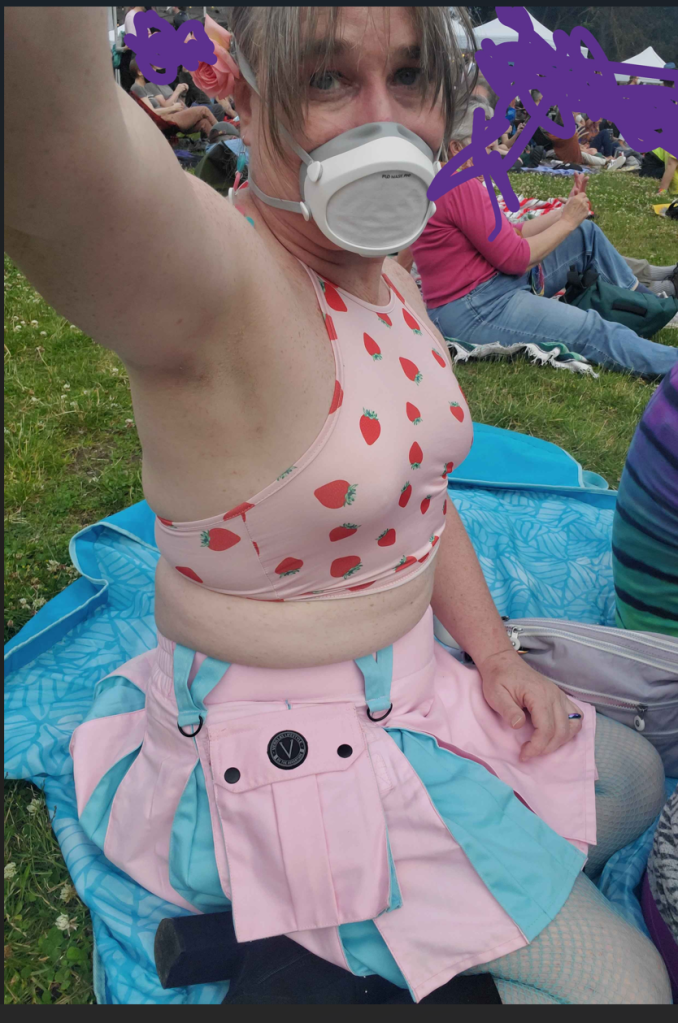
Today, I will dress myself, head down to Seattle and gather with all of the other trans people out at Trans Pride Seattle. I am a bubbly person. I smile, I bounce, I scream in joy. I will generally match the energy that is given to me, even as I sort of advance to my “kindly queer aunt” phase of my life. So with that in mind, seeing me out, dressed up in my pride colors, it would be easy to just kind of conclude that that’s me and that is what Pride is for me. And while I know that countless, COUNTLESS other people have said the same sort of thing, let me reiterate that, in the last five years, much less the last twenty, I have experienced, personally, directly as a result of my trans status:
Family estrangement (1x a week contact minimum reduced to very nearly zero, in the course of five text messages)
A cross-country move induced by a rising wave of bigoted state-level lawmaking, resulting in a radical change to support structures and everything
Bearing direct witness to transphobic police violence
Being fired from a job (debatably, this was sexism, but hey, same thing), followed by a visibly changed salary range
A constantly shifting medical landscape for care (that I have navigated more successfully than most, but still, low grade attention always required)
Hostile stares, yelling, catcalling (this has diminished over time)
This sense of waking up every morning to check to see what thing is on the news, and in particular, seeing what new government legal document that will feature words like “deceit” and “mutilation” to describe things that are just banal features of my life, paired with the most absurd propoganda about trans people one could imagine, assembled by people who haven’t even talked to one of us.
And the above list is probably in the 5% most mild that I can share from my friend group over the same time period. I don’t want to indicate anything other than the truth that I am surviving and I am thriving, but I also do not want to hide what has been going on with all of this. It is a lot, and it is constant.
So, with that in mind, when I put those colors on and I dangle my legs out in fishnets and I wear the crop top and I dance amongst my siblings, I might look like a middle aged trans woman chasing a woo party time, or a poster child for some sort of hyperactivity sensory condition, but what I really am doing is channeling every thing that has happened to me, every story that I have ever heard from a friend over a signal chat, every story of systemic abuse that I have read about. I am taking every little threat from the national media, every indignity that I see, and I bring it to that gathering, and I say to myself
“We are here, we are together, and we are surviving and thriving. I take this with a smile on my face because I am persevering and I am continuing with my transition anyway. You find me disgusting? You find me to be cringe? Well, I am here, and I will not go away, and I will not stop liking who I am. And today, I will dance for all of the people who were killed, either by violence or until the social pressures became too much, and I will dance so that there will never be an equivalent to the 10 year old version of me that had no adults like me to see out there thriving. We cannot be erased, and we cannot be eliminated, and even if you did it, the very next day, there would be some “boy” somewhere that doesn’t understand why wearing that dress on Halloween feels so good. Because we are part of you and we have always been here. It is just a question of whether we thrive or die. And so, I choose to wear both the pain and the joy. And I hope that’s what people see — “I’m here, I’m happy, and fuck you if you want me gone. Hate me harder, in fact.”
So, I had a few hours to myself, and having a few hours to myself, I decided to take the time to consume media that I would otherwise have no chance at all to watch with my partners away. This generally means anime with voices my partners find annoying (this includes my cat’s favorite anime, Dungeon Meshi), or it means meandering, depressing art house think pieces. I took the time for the latter, and opted to watch Monica (2022), starring Trace Lysette. I’m going to just post a spoilery review of this two year old movie, but suffice it to say that I had mixed feelings about the whole thing if you decide to not read farther, and in particular, have trouble recommending it either for trans or cis audiences, even if I got something out of it. Of course, some of this may be characterized by 2024 having been probably the best year ever for trans film, with two feature movies, The People’s Joker, and I Saw the TV Glow both written and directed by trans women, and both just dead-on communicating our experience in deep (and very different from each other) ways. It’s hard to be happy with anything else after seeing that.
So, plot synopsis: We run into Monica driving from California to an unspecified area in the suburban midwest. She is distraught about an ex that she is on a break with, and keeps on calling him and leaving angry messages. She is also calling ahead to what we soon find out is her childhood home, where her brother and sister-in-law are taking care of her dying estranged mother. The mother is introduced to Monica as a hired caretaker, and the three of them, with the help of an assisted living nurse take care of the mother, Eugenia, as ups and downs of memory issues, medical care, and refusal of treatment flare up. Monica has a heart-to-heart with her brother, revealing that it was her mother that dumped her off on the streets, and learning that her brother always missed her. Monica engages with her brother’s children, one of whom the movie strongly implies is a future trans woman “him”self, in, amongst other places, a truly strange scene where the “boy” play-gives birth to a doll. Later, her mother has a turn for the worse, and there’s a heartfelt scene where it looks like Monica forgives her mother without really telling her mother who she is, only saying “there are so many things I’d like to tell you.” It concludes with Monica giving the “nephew” a pep talk before a school recital, and seeing her bonded and together with her birth family as they watch the star spangled banner get played.
Long time readers of this space probably will note that this author has some… feelings about trans women and family estrangement, and that she might have an interaction with the above story line, but let’s go.
So, let’s get on with a little bit of transfeminist theory. In Whipping Girl, Julia Serano talks about two media archetypes for trans women — the “pathetic” trope, which is communicated as extremely non-passing, hyper-emasculated, and generally helpless and harmless. This type of trans woman is an object of pity, and her presence is intended as a source of comedy or as a way for the primary characters of the movie at hand to show their openmindedness and graciousness. Think, The World According to Garp, TransParent, etc. The other main trope is the “predatory” trope. These trans women are depicted as *extremely* passing, often sensual, hyper-sexualized. They exist in the film to trick the cis male protagonist into fucking them, and thereby, they ruin him. This is most famously deployed in The Crying Game, and it’s parody in Ace Ventura, Pet Detective.
Monica does not directly follow either of these tropes, largely because Lysette is definitely a breath of fresh air versus the typically cis people that are playing trans women in movies, her presence is a breath of fresh air. Similarly, we are spared the typical shots of makeup being applied, wigs being put on, and of the mechanics of transition. Also, thank fuck, we are saved a shock “wow a penis!” shot (I’m still upset about the version of this from Ace Ventura). Monica is well past having to learn how to perform femininity, and we aren’t tortured with that.
But, these tropes are sitting in the background of the art direction and the directors’ (Andrea Pallaoro) eye with nearly every scene, it’s just that he doesn’t know which trope this movie is written in. So, before we are even explicitly told Monica is trans, we see her in a shabby motel self-administering a subQ injection into her thigh like some sort of sad sack. Later on, when she has some downtime in the house, there’s a nearly completely gratiuitous scene where she’s camming and requesting some tips while reaching slightly off camera, only to be interrupted by her mother in crisis, in a way that the audience is *definitely* supposed to judge her for. Then, she’s going on hookup dates at bars, getting stood up, leaving screaming messages to men (rightly) calling them out for quizzing her about her body and then standing her up (again, i think we’re supposed to be judging her negatively for this, from the subtext of the shot), and then her opting to just find a trucker parked at the bar to hook up with in a semi-graphic sex scene. She’s continually calling her boyfriend and screaming at him, for the first half of the movie, we really do want to just see this unhinged hypersexualized person barely holding her life together…
Until her family fixes her. Caring for her mother, opening up to her brother, caring for her nieces and nephews gives Monica the home she always wanted. All of her problems with decades of estrangement and isolation and at least one stint of childhood homelessness? Well, they can just be FIXED with a month of family togetherness time. Old Monica and just open up to her brother, and engage with some kids, and encourage her brother to make up with his wife, and she’s a part of the fabric again, and she’s back to being fixed. Just another auntie.
So, I’m angrier at this movie upon writing this than I was on watching, in addition to there not being a real depiction of actual dialogue with the mother to earn this reconciliation, I’m finding myself pretty intensely upset with the idea of including trans women in the already toxic sexist trope of “well, domesticity is all you need to be fixed.” Ultimately, this story feels very much like the classic “fallen woman saved by the beauty of the home” with a trans spin on it. Watch at your peril. Again, though Trace Lysette is great, there are moments that feel quite real, but I can’t deal with the things that she’s asked to do, and the overall arc is too frustrating to ignore.
Per this action from Julia Serano, I am standing up and adding my voice to the collective scream. I think everyone with a heart whatsoever had some feelings on November 5th. I know that I certainly did. But I don’t think it was the shocked wailing that I saw around so much of the internet. The election was a coin toss, and it fucking came up tails. There are people that are motivated by hate and anger, and there have always been a lot of them (seriously, look around, even at “your side”, and see the ratio of people who seem to be motivated by helping someone, versus punishing something bad [even if it is objectively bad]). That this avatar of punching at people who were already hurting came to the top isn’t surprising so much as “same shit, different day” in a lot of ways.
Also unsurprising to me was Seth Moulton’s now infamous op-ed. As I wrote in my tepid endorsement of Harris, I very much expected the Democrats to cave on trans rights in the event that Harris lost. What shocked me, though, was to see the first trans woman to sit in Congress to passively accept a bathroom ban that would bind all of the congressional staffers that don’t have their own private bathrooms along with her. I am skeptical that this decision will buy her any peace or grace from the people who would stomp on her, and Nancy Mace is already out there trying to extend the bathroom bans beyond the capitol walls, and sneering at trans people publicly. But it should be extremely obvious to literally anyone who is looking — the current House, despite a losing presidential ticket, now stands at 220-214, with one unresolved seat, and three house members leaving due to Trump’s cabinet shenaniganery. They don’t control everything, and even a small number of moderate Republicans can block legislation. There is no fucking reason whatsoever for Democrats to not offer a united front in the face of what is coming, to all of us, to immigrants, to the people trying to survive in “liberal cities”, to black people facing policing, and yes, to trans people. All told, Donald Trump barely won, and this congressional majority is slim in both houses. This is not the time to cave, especially if there was any belief in those platitudes about “democracy [being] on the ballot” last month.
All that said, I personally have no fucking desire or inclination to go back into the closet, back into hiding, or to ever shut up, no matter what Donald Trump says, and no matter what the Democrats do. The cost to becoming who I am has been high, and they are so desperate to add to the tab but without ever specifying why and what for. I will continue to write to my Representatives, I will continue to write in this space, and even if they continue to try to hurt me, I will yell out what they are doing for all to see and make them look me in the eye while they do so. I will do what I can to maintain a resilient community that uplifts everyone in the place where I live. And I will live out the rest of my life as a woman named Zoë, no matter what a bunch of assholes in suits think of me, no matter what anyone does or says. Everyone has the rights to their body and their selves, and we have earned that for ourselves, and we will not recede, and if politicians fail to take care of us, we will take care of each other.
When I was younger, I took absolute delight in understanding and picking apart politics. Process was this fascinating puzzle. So was figuring out how coalitions came together, how stuff winded through committees, how you could get surprising results, like Old Bush and Tip O’Neil coming together to put the clean air act into place. I wrote a lot about politics, both in blogs and in social media. I wanted to take this messy and complex thing and make it understandable. I still kind of want to do this sometimes.
But, that has gotten harder and harder and harder as the years have piled up. The first big hit was seeing how the Gingrich Congress unfolded. I was too young in 1994 to really understand what was happening, but Gingrich took the above approach and firmly rejected it in favor of a new, scorched-earth style of politics. Republicans of this period, quite overtly, stopped talking about careful policy proposals and opted for streamlined and centralized talking points. Right wing media arose at the same time, in the form of Rush Limbaugh and Fox News to reinforce this sort of newspeak, along with this notion of being at total war, even with the explicitly centrist Bill Clinton.
Even still, there was some joy in communicating the differences amongst even the Republicans. I’d hold primary watch parties. I’d liveblog states of the union. I’d cheerily talk about all of the stuff to kind of indicate why it *mattered* and how you could push the system in places to get outcomes. This got worse and worse. I endured the September 11th game of everyone who wasn’t explicitly with the Iraq war being accused of treason, and getting that much for even daring to suggest “perhaps going to Afghanistan without a plan is unwise.” Still, there were important and interesting differences inside both of the parties through the GWB era. And I could follow it, and have chats with my friends about all of it. It seemed like a critical mass of people were getting upset with how things were, and that the dam was breaking with the 2008 financial crisis. Obama won…
And around this time, three things happened that changed my relationship to politics. First, there was a hyper-acrimonious primary that was nearly completely online for the most part. It was very interesting watching friends groups destroy themselves over what was, to me, a very small policy difference between Clinton and Obama. Second, the republicans, out of racism and what seemed to be a realigning election, went absolutely apocalyptic in their resistance to Obama. The “everything gets filibustered” behavior became even larger, which lead to the third thing, which was Obamacare’s initial passage being pretty much the last hurrah of any ordinary process for a bill passing Congress. Even this process involved a bunch of nasty private negotiating, most notably Ben Nelson aggressively holding out unilaterally on the bill. This last feature would become a key feature of pretty much all future congressional wranglings, with committees being replaced by ping-pong legislation between the two chambers and the President, with committees being de-emphasized more and more, and the real understanding coming down to Kremlinology of the Speaker, the President, and the Senate Majoritiy leader, along with maybe some party holdouts. In such an environment, there is nothing really to follow, and even organizing is close to meaningless, because the decision comes down to “I hope this asshole from West Virginia is merciful”.
And so, Donald J. Trump got elected. There’s not much useful to add on to the pile of Donald Trump discourse, but all I really will say is that the purpose of Donald Trump is not to inspire, not to solve problems, not to do anything but to be mean. The media has tried to call him out for his namecalling and meanspiritedness, but that’s the point of him. His supporters are angry, and nihlistic, and don’t want solutions, they want someone to blame, and he is blaming them in blunt, harsh, and direct terms. Since the Republican party has become the Trump party, to the extent that for most of that period, the Republicans have had various blocks in the place in the system, there is no talk of anything but “surviving this”. Who, at the moment, the exact white whale that Captain Ahab is stabbing at from time to time may vary, but he is there to stab, and no amount of legalistic or philosophical discussion can get through to him or his supporters. And it’s turned my analytical brain off.
And so, we’re at election 2024, in late October. Most election forecasting shows a 50/50 shot for the election. We have, in Kamala Harris, someone who is desperately avoiding so many issues, most notably Gaza, but in the face of the Republican closing message on this election being “demonizing trans people”, she can only muster “I will follow the law” on a question of fundamental rights. No comment on Israel expanding its war to Lebanon, or on them firing on UN peacekeepers. She threw the people dying on the border under the bus in her first week of having the nomination, resetting the debate about immigration to “catastrophically deporting 20 million people” versus “draconian compromise border bill”. Even “codify Roe into law” does not do enough to protect people needing abortion care or for the numerous other people whose bodily autonomy is desperately threatened. Nor does it repeal the fucking Hyde amendment. Also, of course, we did not have a real primary to get here, which eliminated the opportunity to have a public internal debate about all of this. And, also, of course, the DNC was so so so so jingoistic, even for a political convention.
But the thing is, with this years swift boat attempt being trans people, with the catastrophic hate that Trump brings to the table (and I honestly think focusing on the policy in project 2025 misses the point — I doubt Trump will systematically enact an agenda so much as “grab power and scream at opponents, and act vindictively), it’s pretty clear to me that the Democrats will be directly blaming trans rights for an election loss, and that Trump will be out to punish whoever he can to feed his ugly little hate machine.
I will be voting for Harris and Walz next week, but any joy in doing so will be long gone. Whoever wins, I will be investing in my local community and disengaging from national elections. I will be annoying to my state and federal legislators, and I will never ever ever shut up about trans rights. I don’t believe in voting as anything other than pushing a button and hoping for a response, and do not have the moral sense of “endorsement” that a lot of people have, and I vote with that in mind. Instead, I simply hope for a next four years where continuing to fight will be easier and more survivable. Anyone else’s path can be what it will be. I can absolutely understand not being willing to do the same, particularly from a state where the electoral college has rendered your individual vote irrelevant. That said, this is what I am doing. If you are a Trump voter at this point, and wish to maintain ties to me, well, we will have to look each other in the face and really talk about what this man’s legacy has done to me and mine in the past eight years, and you will have to make a choice.
May all the fucking guns in the world be melted to scrap iron and we actually get past fighting about bullshit and actually start helping each other.
So, it’s national coming out day today, and conveniently, the this photo showed up in my Facebook memories.
Zoë cooking in her kitchen, 2016
It’s national coming out day. Might as well bask in what to me is the mild cringe of this pre-hormones person as I tell my story.
If you’ve been around me for the long haul, you’ll know that I’ve come out, redefined, and reexplained myself many times over the years.
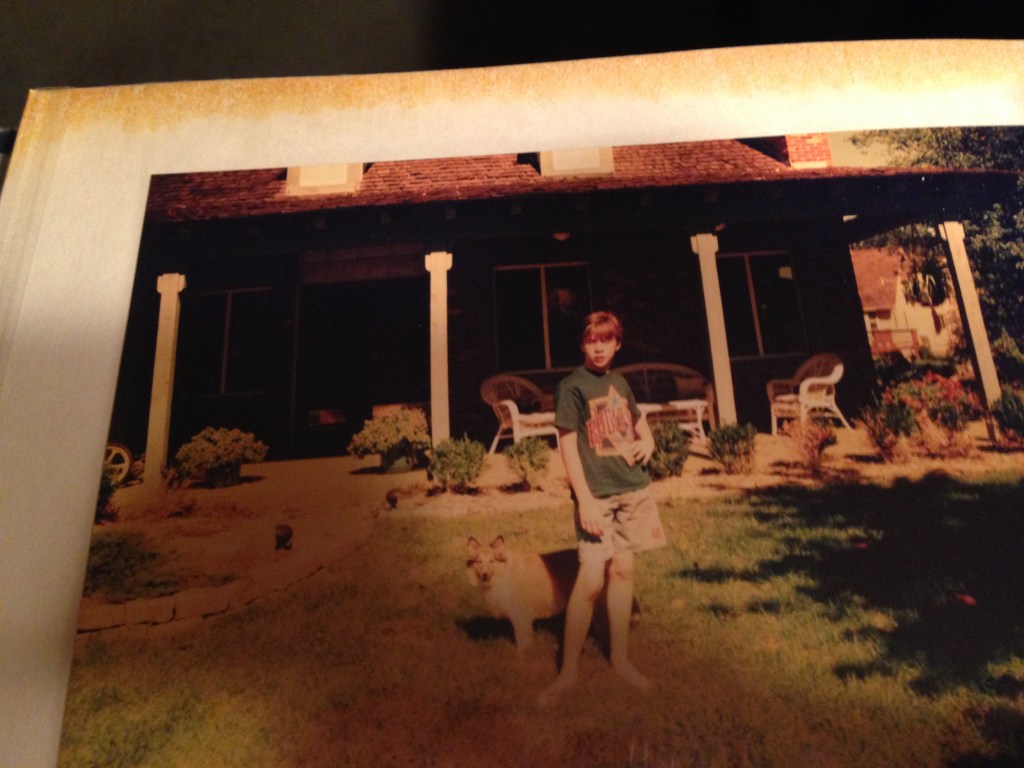
The exact moment when it was clear that I was something other than a straight boy is probably lost to the sands of time, but I will submit that somehow, the tween in the polaroid thought that was a way to pose to a photo or something:
Zoë in front of her childhood house with her dog Alice, circa 1992
I honestly have a very fuzzy memory of a lot of my life before I got to college, and even a lot before 30 is echoes of memories.
I did come out as bi in my very early 20s, started going to gay bars. I had an intensely bad experience (read about it here: https://zoe-is-wish.com/2023/05/22/the-trans-rubicon/ , but I’m not writing a trigger warning post here), which kind of put me off of dating men for the most part. Still kind of wore that part of my identity on my sleeve for most of my 20s, to the annoyance of many people around me. For a lot of this time, it felt safer. It was a way to set myself apart, and it was also a way to safely explore who I was. It also let me kind of realize that I did not engage with relationships, dating, or life the way that cis-het men did (and loudly talking about mlm attraction certainly scared off the worse of those men). From the experience above, and just in general, I pretty quickly realized that I did not especially fit in with the gay male world, either, but I just kind of chalked that up to there being so few bi men in my world, and being in the middle just made me different than everyone.
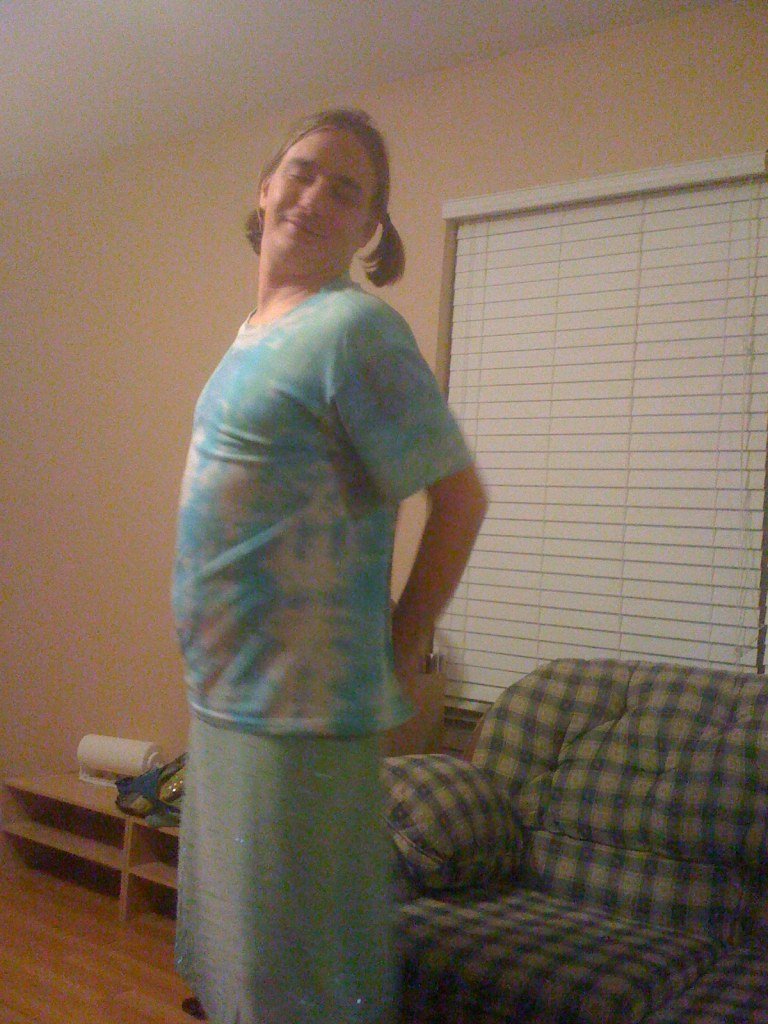
But whose approval was I REALLY in need of? bi women, it turns out, and certainly that identity helped with that. Over this time period, I slipped into pretty bad alcoholism, nearly constantly danced with various self harm instincts, and desperately sought out any sort of approval tokens I could find. Over this time period, gender stuff kind of came to the fore, very very slowly. I didn’t know what a trans person was, and everything I did know came from intensely transphobic sources like TERF feminism (I read a lot of stuff while in recovery), and the super toxic media portrayals from the 90s like Jerry Springer, Ace Ventura, and the Crying Game. I certainly couldn’t see myself in any of those portrayals. So, I’d say I was “mildly trans”. By the time I was 29 or so, I was willing to call myself genderqueer, and later “nonbinary”. Here’s the oldest photo I can find of myself in “not-boy-mode”:
Zoë at her then-girlfriend’s house, 2009
As my thirties progressed, the exploration continued. I did out myself to my parents as bi and nonbinary in this period, to kind of disastrous effect, in a way that kind of forced me back into the egg harder. Relationships were fraught during this period, as I did not know how to set boundaries for myself, and there was a lot of chaos as I figured it out. I did start dating my wife during this period, and being nonbinary went from a sort of private thing to a very out there and aggressive part of my identity.
As the 20s became my 30s, the alcoholism did not subside, though, and it started to catch up to me, after numerous cutback attempts failed. There came a point where it became clear that I could either continue to drink or I could have a life. I chose the latter, and quit cold turkey in 2016. I was happier, I was more able to be aware of myself…. and I suddenly found myself much much more dysphoric. By this time I had several real actual trans people in my life for quite a while. I still kind of refused to see myself in them, but the clarity of sobriety, combined with just… time made all of it catch up to me.
By the time the pandemic isolation hit, three things happened. The first was external. My bestie made some knitted falsies for me, and playing around with corsets and falsies in my house gave me the most intense sense of dissociation I’ve ever felt. The idea of looking like that in the mirror and having dead not-me flesh there made my body revolt.
The second thing that happened was I just started self-reflecting. I started reading about hormones. I started looking at before and after transition photos. And I asked myself: do I want to die in a boy’s body? And I could feel the intense revulsion in me bubble up.
The third thing that happened was that the pandemic isolation sent me to discord, and to trans discords in particular. I saw how much the above story was… almost common. The inaccessibly different from me trans women I longed to be started to just look… like me. I went to folxhealth.com (for the record, I know now that there are MUCH cheaper, albiet less convenient ways to start HRT), I set up an appointment, and here I am on day 1 of HRT
Zoë’s first day on HRT, June 2021
I posted the above to our local texas burn community’s nonbinary page, and say “hey, I’m doing this.” And I let time pass. And the transition feelings hit, the dysphoria brainfog lifted, and I became myself. By the time I left texas, I had loudly told most of the world that I was a she/her woman, mostly a lesbian. I had my face with my real name under it published in the Austin-American Statesman, and I had been quoted in the Texas Tribune
I came out to my birth family, and THAT went catastrophically. I had to flee Texas.
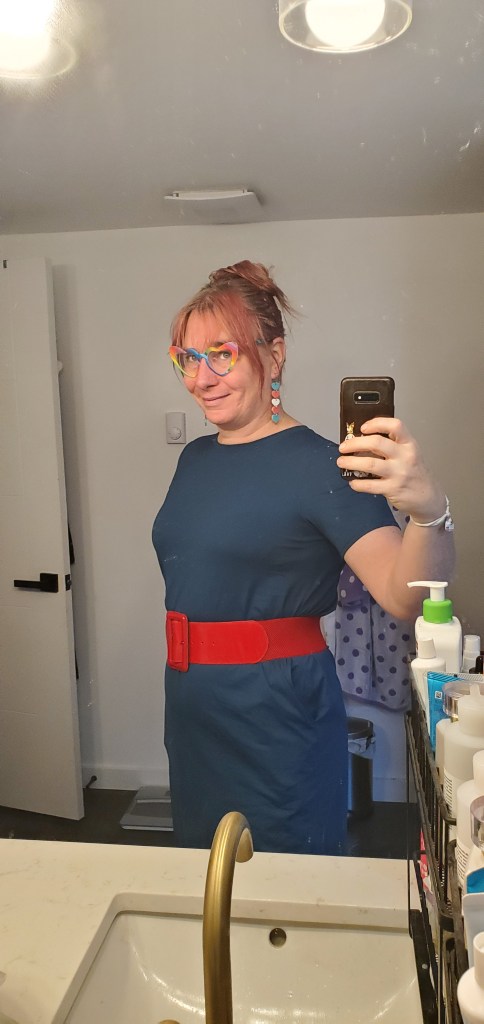
But I’m here, I’m alive, and I’m happier than I’ve ever ben, because even with everything else that has happened,
Zoë as of time of writing, the 11th of October 2024
well, at least I don’t see that ghost in the mirror when I look at her anymore. Happy national coming out day.





 Zoë Michelle's little corner of the internet