
Photo by Mikhail Novov
So, I am currently at 11 weeks and change post-op. My surgery packet says that 12 weeks is the “resume normal activity” point, so I figured now would be a decent time to go and type up something about the recovery process, with a focus on helping other trans women prepare for this whole ordeal. At this point, I will focus in on full depth PIV vaginoplasty, because that is what I had (strictly, scrotal graft with tunica vaginalis supplement, if you want to get geeky about it). I will be getting into gross details here, so be ready for that. This is also a bit of a diary for me to just remind myself of this point in time. I will also get into what shopping list items helped me and which ones were meh.
But hey, you got your date, and you are now wondering “what now? What do I expect from this? How will I survive?”
And before I start, the zeroth thing that is most critical is your support person. You are going to be helpless for a bit here. The more you do, the more risk you put your new vagina in of complications. It’s really important to have someone you trust take care of you through this, both to cook and clean around you, but also to talk through your feelings, and shuttle you around. I don’t know what I would have done to get through this process without the stellar taking care of and socializing I had during my month of hard recovery.
And kind of on this note, it’s important to have your mental health right before you try this. This is a statement made on this over and over on vaginoplasty advice, and I never especially got it, but on the other side of it, there is a very real drain to recovery. And this is not about the pain and difficulty in the initial phase, which is manageable with normal pain management stuff. It really is about dilation, and it is about the long tail of recovery. Dilation is very much a marathon — at the start, it was a sexual trauma trigger for me, remembering that sensation of holding a hurty thing to my genitals and waiting for the experience to end was very reminiscent, so that was a thing to be prepared for.
But I got over that by like week 2 of dilating. What is really the mental health drain is the period where you are not complete better but you are returning to “normal” life. Because dilating still remains just relentless and inflexible. Did you sleep late? Well, better find a time to sneak away for an early lunch break and get that morning session in. Have a nasty fight on the internet? Well, you’re going to have to calm the fuck down and relax that pelvic floor, because it’s time to stretch yourself out! Stay at the party too late? Well, guess what you have to do after you take your makeup off? Camping? Working late? Well, if you want to heal right, you still have to get that fucking session in. And in addition to the time spent actually doing it, it usually involves 10-15 minutes of setup and getting to depth and 20 minutes or so of cleanup.
And in addition to THAT, there are just continual little small changes to sensation and discharge, and irritation, and the shape of things that will leave you wondering if it’s medical or not a problem, and wondering what is worth calling back into the surgeon’s office about. It’s stress, and even now, at three months into what so far has been a relatively uneventful recovery, is often quite physically uncomfortable. You have to be ready to not be recovered for like six months to a year, discharging for a lot of it, and trying to figure out the interplay between swelling and your final aesthetic results for like six months to a year. There is no fine line when your body stops feeling like an open wound and just your new genitals. It’s both things at once, in different proportions, for a long time.
Shopping list
Essentials
- Wedge Pillow — you won’t want to put any pressure on your surgical area at all while you’re recovering, but you will probably want to sit up a bit, so having this on your bed is super important. the angle also helped me with dilating a lot early on. If you can source this through t4t supply swaps, I’d highly recommend this. This was life-saving through the first month, but became rapidly less useful as I recovered
- Peri-Bottle with a nozzle that curves back toward the bottle — vaginoplasty recovery is a constant battle to stay clean. You will not be able to see anything in your new vagina without a mirror, which means that to keep everything free of blood there, you’re going to need to clean up with a peri bottle in the bathroom every time you’re in there. Having a nozzle that helps you reach under and spray up is also just ergonomically very nice, and I recommend that versus ones with an un-bent nozzle. I also became even more attached to my bidet toilet than I was before. Pat down with toilet paper after you’ve cleaned off all of the everything.
- Puppy pads: dilating is super messy, and especially early on, is kind of a disaster of blood and clots and dead skin all mixed together with surgical lube. Even trying to launder all of that is a disaster, which makes just using disposable puppy pads for the first few weeks nice. I have since moved on from these to washable baby changing pads, and I know some women cut the puppy pads in half during later stages of dilating, but i’d recommend an overkill disposable solution for the first week or two until you know how much of a mess you make. In early stages of recovery, this was a nice discharge solution too — it was much more comfortable to jsut free bleed onto the puppy pad than to worry about any sort of absorption, but when I had to reenter civilization, I found that the best solution was:
- Period panties: this is probably more a week four or five thing than for that initial month, but I have been very grateful for abandoning pads for period panties. it’s tremendously less friction and irritation on my surgical site, and by the end of the first month, i’m down to something like one or two tampons worth of discharge a day, so this has been a fine solution. I’ve done well on both the period panties from Aisle and tomboyx, which are both mostly cotton, but there are a variety of choices. After week three, i never had like that big heavy bleeding, it’s been more like a two month long light flow period, and so I feel its more important to worry about comfort than it is about managing heavy flow and leakproofness
- A variety of different lubes: early on, you’ll probably be on surgical sterile lube. There are a few choices here with various advantages and disadvantages. I eventually developed a pretty aggressive reaction to surgilube, which eventually ended in some pretty sizeable burns on my vulva that are still not completely healed. There are a variety of other choices on the market, though I do think the general consensus is that early on, you will want one of the thicker ones. As you go on, you can experiment with different brands and styles, but do understand that you will be going through a *lot* of it, especially when you are sizing up dilators and having to lube multiple ones. Having some options to learn what works best with your body is important
- Spare hand mirror – you’ll probably want to examine things down there, and a hand mirror is pretty essential, especially for early phases of dilating, and for like, putting aquaphor on any irritation. I’d say, anecdotally, about 50% of post-op women break at least one hand mirror during that first month. Having a spare in case this happens is pretty important.
- Gauze — you’ll want a large pile of sterile gauze, to help you clean off the vulva, and to clean off the space between your folds (do ask your surgeon about the best way to do this), and to soak up various blood
- Waffle/donut pillow — if you’re going to be in a car or a plane immediately post op, sitting will be pretty awful, and these make it better. Most women report that the waffle is better than the donut, but I made do with a donut.
- sex toy cleaner — this is how I keep my dilators from picking up a smell, which is a common mistake.
Nice to have
- Alternate dilators — your surgeon will likely assign a set of dilators to you, most commonly the classic four SoulSource GRS dilators, but different surgeons can differ as to which ones they provide or which sizes they tell you to use. it’s worth noting that in the last year, SoulSource changed theirs from a plastic deisgn to a silicone coated design. The silicone is grippier and has a seam, and some women report having more trouble with them, pain wise. Note that this “less grippy” deal is a double edged sword — yes, it is easier to insert it and remove it, but it is also a lot easier to turn your dilator into a railgun bullet if you laugh or cough too hard while dilating, and so, it’s more important to have at least one hand on the dilator if you have the old style. Irrespectively, you can order direct from SoulSource and ask for one of the old-style plastic ones if you are worried about pain. Note that you are likely to be spending the largest amount of time with your largest dilator, if you go this route and want to save money (I personally have only touched the orange one in the last month). I know of some women whose pelvic floor therapists have preferred to work with their own brands of dilators — check with your surgeon here. I personally have made do with the newer silicone-coated ones.
- a pile of cheap hand towels — I know I felt really gross about the sheer volume of disposable stuff I was throwing away, and also I feel kind of gross having my hands coated in lube during dilating. Having some hand towels to clean off on is nice, and I can just wash them with my normal laundry
- High CBD gummies — these honestly did better for my pain management than my prescribed narcotic. Our rental house in san fransisco had a dispensary around the corner, and it was a life saver
General pre-op prep
Do make sure to book an appointment with a trans-aware pelvic floor therapist. They will be able to give you excersises for relaxing your pelvic floor, and being generally aware of those muscles, and all of that knowledge transfers directly to troubleshooting problems with dilation, and making dilation less uncomfortable. If you are not going to be travel distance to your surgeon at the three-month mark, it is probably a good idea to book a three-month postop checkin with a trans-aware gynecologist, if there is one in your area, since having a speculum exam to verify that your insides are healing properly.
So, as for booking housing for recovery, the real big thing is that you will be required to be like dead-on immobile for quite a while after surgery. The details of it are kind of surgeon dependent, and whether you have two or one stage surgery, but I had the one-stage version, and it meant a solid month of leaving the bed only to go to the bathroom, go to post-ops, and maybe to get up for a drink of water. Especially that first week, I was so wrecked (and attached to a catheder and wound vac), that even the bathroom trips were a bit of an ordeal. With this in mind, booking an appropriate place to stay is super important. Having a bed that is comfortable, easy to get in and out of, and close to a bathroom is essential. You won’t be taking baths for a while and might be shaky on your feet, so a shower that is easy to get into and out of is a big deal, too. Finally, when picking a place, note that I found riding in vehicles and on the plane to SUCK while I was in early stages, so minimizing the car ride to post-ops is definitely worth it if you can. I also really recommend saving yourself a half day to create a nice nest around the bed that you’re going to be living in several months. Set up everything so that it is within easy reach of where you will be sitting, including chargers, media, cleaning supplies, and a variety of pillows. If you have bowel prep as part of your pre-op routine, I recommend this as a good activity for that day, because going very far from your toilet will be… erm… a bad idea while doing the bowel prep anyway.
I’d also recommend using these last few days of pre-op time to do anything that you’re going to miss while incapacitated. Maybe that’s taking a bit of excercise. If you travelled to get surgery, maybe that means doing some touristing. Maybe it just means a nice meal with your helper person. Enjoy being at your baseline, because it will be a while before it’s back, and it was good for me to set my mind right in those last few days.
Recovery Timeline
The below will be me giving a very condensed view of my path to recovery. This is kind of here to just give an idea of how long it all takes, and the various stages. This is all extremely surgeon-dependent. I opted for the scarless PIV from Dr. John Henry Pang at Align surgical
Week 1: Wake up from the surgery, all is right in the world, just a sense of peace and satisfaction about the whole thing. IV drugs are still really only beating the pain back to a 4. Wake up with vagina packed solid with gauze, and then a wound vaccuum taped on top of the packing. (for the record, a wound vac is basically a sponge to cover the surgical area, that is attached to some tubes with suction. We named ours “slurpy boy” as he proceded to make slurping noises and sucked various bloody fluids out). I am also cathederized. After discharge back to the rental house, I mostly lie in bed playing handheld video games and watching TV and reading. This week is really about just recovering and healing and resting, and HOLY FUCK I woudn’t want to do anything else
Post-op #1: This is the big moment in a lot of ways. You come back into the clinic, you get the gauze removed from you, you get your first view of the vulva, they use the catheder to fill your bladder with saline, they remove the catheder, you attempt to pee for the first time (I also let out an absolutely epic queef upon unpacking), you get instructions on cleaning, and they teach you how to dilate and you dilate for the first time. Unpacking to me more felt like my whole body screaming “THIS IS WRONG THIS IS WRONG” than actually painful, but that first dilation and the catheder removal weren’t the most comfy experiences I had ever, either. I really recommend saving your pain meds for this moment and making sure that they are at peak like 5 minutes into this appointment, because it is a lot.
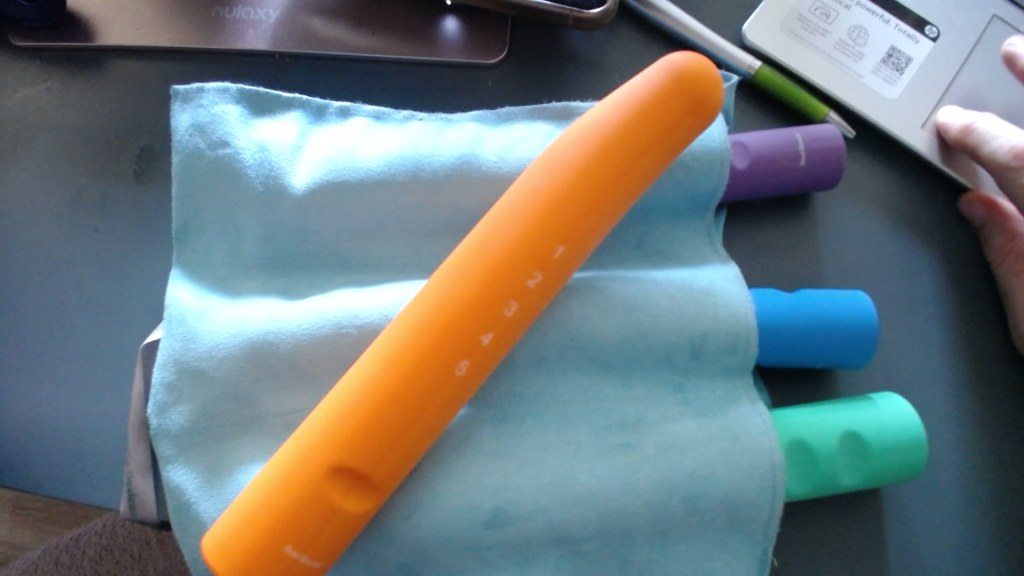
selection of standard dilators, new soulsource style
Weeks 2-4: these are all a lot of mostly the same. Your time is kind of spent dilating and recovering from dilating. It has a bigger emotional load and it is more painful at first, so I found myself kind of needing 30 minutes after cleanup to just gather myself up again. During this phase, you finally see everything, and you are FORCED to look at it because of the dilating, so it becomes really easy to fixate on every change in sensation or appearance that I had. I developed some minor complications during this period (a blister from a suture coming unfastened, and some wound seperation), and found myself calling into the surgeon’s nurse helpline semi-regularly. I came in for weekly post-op appotinments and had everything checked by some combination of the the surgeon, the physician’s assistant, and the nursing staff every time. By post-op #4, I was cleared to go back home which brings me to:
Flying back to my house: This was easily the most uncomfortable part of the recovery. Even at 4 weeks, and even taking some pain regimen stuff in a way that it would peak mid flight, and even using the donut pillow over a first class seat leaned back all the way, it was still exhausting, and it still hurt quite a bit, despite my pain being down to like a 1 or 2 when I was in bed. I needed wheelchair assistance in both airports as well.
Months 2 and 3: and this brings us back to now, really. This time has been a steady tapering back to normal life. The first week back home was largely similar to the last week in San Fransisco, but over time, I started making my own meals, feeding the cats more, and just doing more and more of my normal life. I am now recovered to where I can do 30 minutes on the elliptical fine, and while I am no way back to my pre-op level of health, I am definitely on the upswing. My wound seperation is still not completely healed, and I still have various spots where scabbing from the stitching is producing blood, but generally, I am approaching “back to normal” with two exceptions: 1) I am still discharging about two tampons a day worth of blood. My return to normal would be far less normal without the aforementioned period panties, which I need to wear pretty much every waking hour, and 2) dilating. Dilating easily takes up three hours a day, and can’t all be done at once. It has stopped being painful, and is just boring, but it is still a thing that my whole day has to be planned around, and that needs to happen no matter what else is going on in my life, whether it be camping trips, heat waves, or getting into a nasty argument at work. Eventually it will be down to one session a week, but for now, it is a lot to deal with.
So that’s my brief “what to expect when you’re pre-op”. I hope that it is helpful to anyone out there. It’s a harrowing and intense and very specific journey, but at the end of it, my body is my own. I feel happy to have gone through it and have zero regret. Please let me know if you disagree with anything or feel that I left something out. I have had one of the easier recoveries out there (so far, knock on wood) and am very happy with that, but I don think that would affect my overall feelings.


glad things are going “relatively uneventfully” with your recovery 🙂
LikeLike
Thank you!
It’s an uncomfortable difficult slog, but after reading so many recovery journals, I very much know it could be incredibly worse *knocks on wood*, and I’m really happy about the whole thing
LikeLike